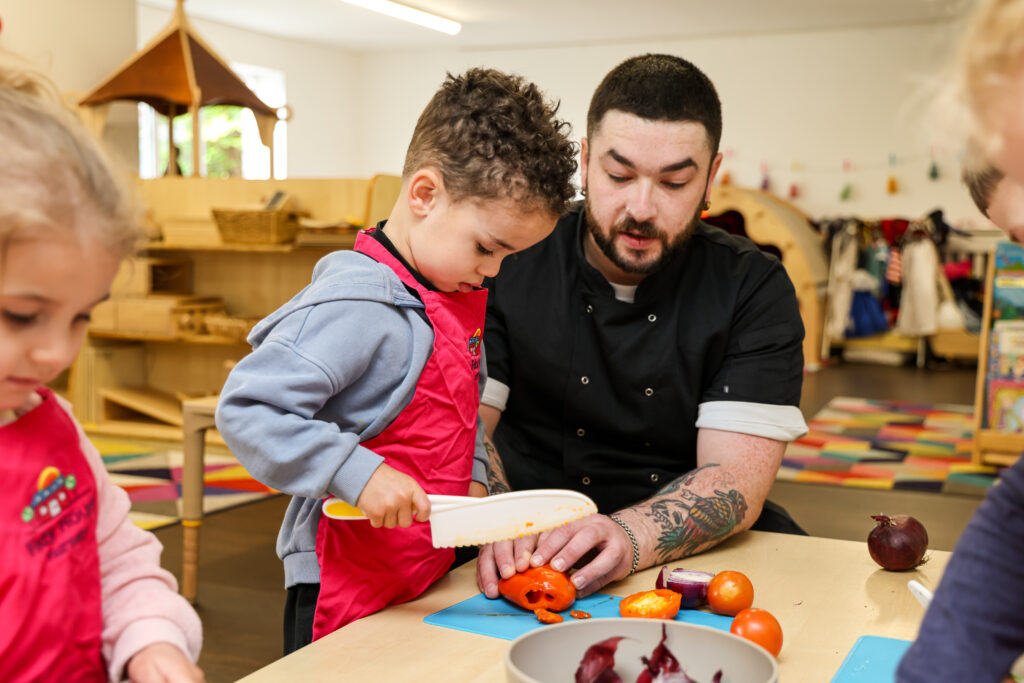
Engaging in role play with children can help them to develop their expressive arts and design skills by encouraging them to be imaginative and creative through shared, sustained thinking! Did you know there are lots of ways to help our children to develop skills in other areas through role play?
Here are our favourite role play themes that provide wonderful learning opportunities…
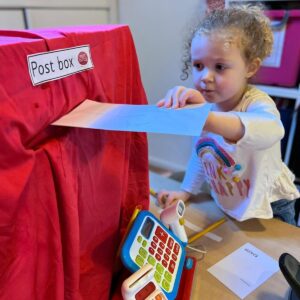
Family role play
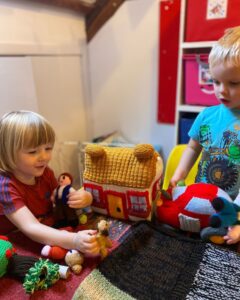
This role play theme is particularly good for playing with friends. Through re-enacting their home lives together, children can develop a greater sense of themselves and others, helping with their personal, social, and emotional development.
Talking about those closest to them with friends can help children to express their feelings, and they will also learn about the lives of others and different cultures along the way. Family role play also goes hand in hand with helping children understand their own role in health and self-care, as it allows them to act out things such as dressing up, feeding and healthy eating.
Playing shops
Set items out such as fruits and vegetables and give your child a bag and some pretend money. Then switch roles and let them be the shopkeeper. This can help them to develop early maths skills through number recognition, counting and comparing.
Spaceships
Spaceship role play is a great way to develop your child’s understanding the world skills, and there are lots of items around the house that can double-up as a spaceship, even something as simple as a sofa or cardboard box. Whilst exploring the stars in your spaceships, try and teach your child some new, more challenging words such as ‘astronaut’ and ‘satellite’ – they may not get chance to hear these words from day-to-day!
If you wanted to take this further, you could try making your own warning signs to help familiarise your child with common warning signs they may come across in everyday life.
Goldilocks and the Three Bears
This is an extremely fun role play game to help to promote early literacy and can help your child to develop their storytelling skills.
You can start by reading the story to your child and asking them questions about what they think of the story and the characters. After you have read it, you can make your own small, medium, and large bowls of porridge using oats and see how much of the story your child can remember to help to support their communication and language!
Visit our contact form for your free brochure pack today!