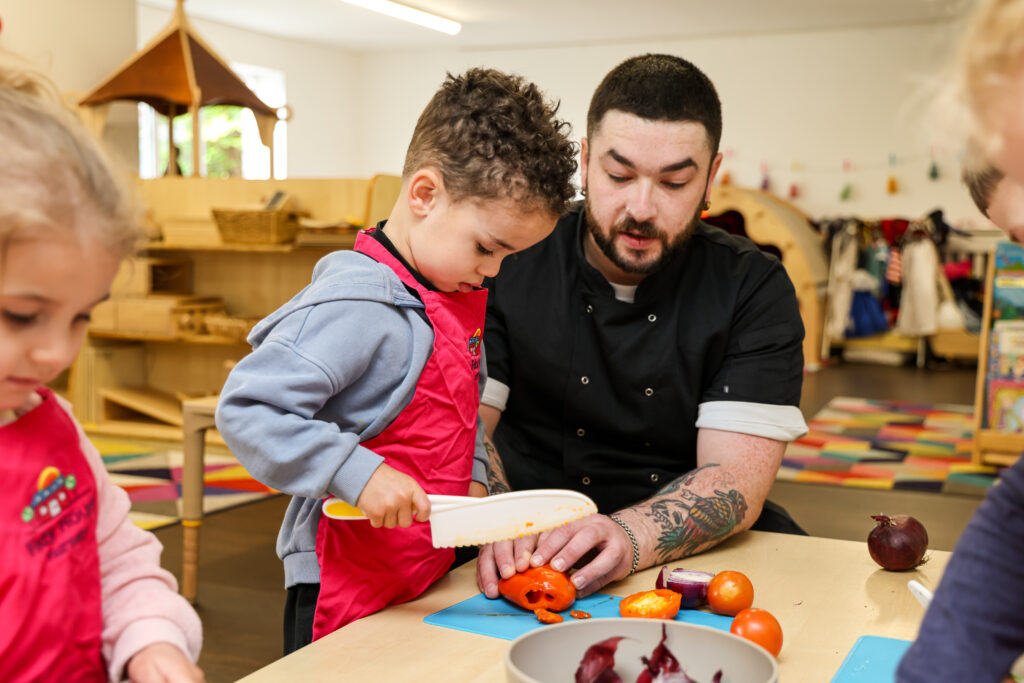
To celebrate the completion of our brand new sensory room, we have created your very own guide to sensory play.
Continue for more on sensory play and our new sensory room!

What do a walk through the woods, a child splodging paint onto paper with their fingers and building with smooth wooden blocks have in common? Each activity is strongly linked to the senses. Activities that require children to use their senses force them to really engage with the world and learning. Activities such as watching television or playing electronic games therefore limit sensory experiences and therefore sensory activities stimulates children’s brains creating new pathways and connections. This also improves spatial awareness.

Most of the toys available in shops are plastic and focus on over bright visual and some tinny auditory stimulation with few options of how to play. It is therefore far better to be outside with your child. Listen to the crunch of leaves and twigs underfoot and birds singing. Smell the scent of fresh flowers and feel grass between your fingers and toes. When choosing toys for your child to explore indoors, think about their texture. Wooden blocks feel smooth and heavy and make satisfying sounds when knocked together. Soft materials and dolls feel comforting and good to snuggle down with. Avoid too many brightly coloured plastic toys as these can be over stimulating and which children quickly tire of.

Here are some great sensory activities that you can do with your child at home:
Sight
Close the curtains and decorate a table with safety twinkly lightbulbs to create a sense of awe and wonder. Put a collection of visually stimulating objects to create your own sensory room. Materials such as shiny metal, a torch, sunglasses and magnifying glasses provide a wide variety of materials. Coloured cellophane and mirrors also encourage your child to explore.
Sound
Go for a ‘listening walk’ with your child around your neighbourhood. Make a list of all the different things that they can here and encourage your child to mimic the sounds. This activity helps to develop their early phonics skills, which are the foundations of reading and writing.
Touch
Make a feely bag. Encourage your child to tap into their sense of touch by placing different familiar objects into a fabric bag and asking them to identify them by feeling them.

Smell
Make smelly bags with your child. Fill small organza bags with a few whole spices or dried flowers such as cinnamon, lavender, star anise or vanilla. Your child will enjoy their scent and enjoy making them with you.
Taste
Be careful when providing young children with sensory play objects as they will want to use their mouths to explore them. Children enjoy experiencing different tastes so let them try fresh herbs and different fruits such as papaya, mango, figs and lychees.
These are but a few examples of the rich variety of sensory play your child can enjoy. When looking for childcare make sure that the nursery that you choose for your child has a good range of toys made from natural materials such as quality wood.
Visit our contact form for your free brochure pack today!