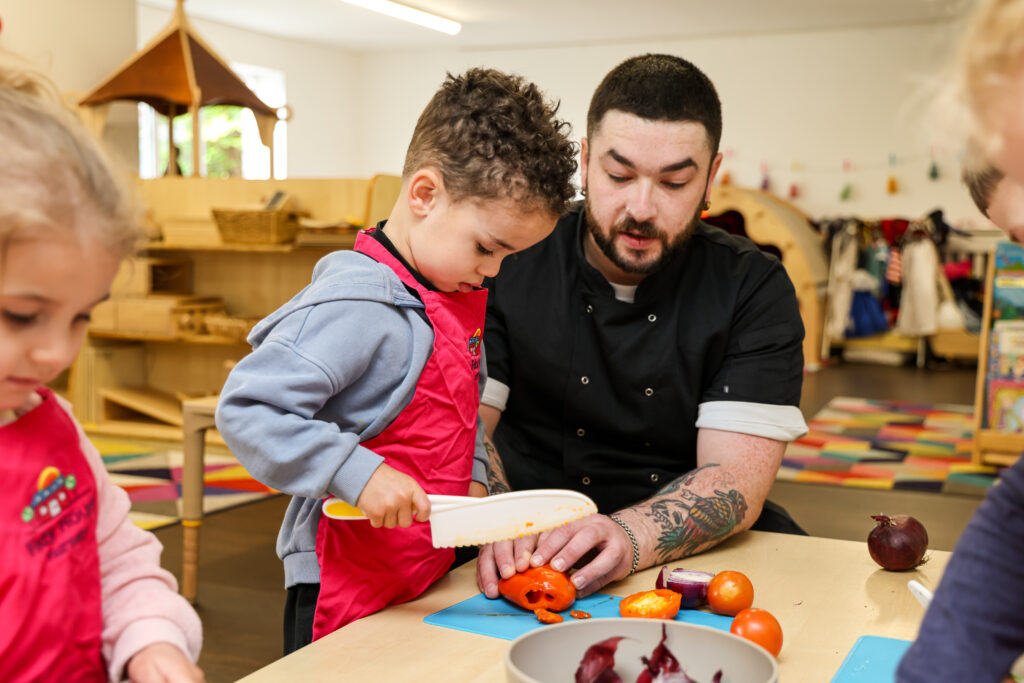
What does sensory play actually mean?
Here is some benefits of sensory play and how it can stimulate your child.
It doesn’t even have to be something that you need to think about too much. Babies, from when they are very little, are already using all of their senses to investigate and explore their environment. What we can do, is make sure we allow and encourage our children to keep exploring using all their senses.
Top tips for sensory play at home:
- Children won’t always do the things you expect them to. Let them do what they want with the activity. Because they will know which senses are going to help them learn the most and also what they’re ready for.
-
Letting your child take the lead in sensory play is important.
Little children will want to touch, feel, smell and put things to their mouth. They want to use all of their senses to learn, and this is something that we, as adults, might unconsciously try to interrupt.
- Similarly, when it comes to messy experiences, Let them get messy if that’s what they want. But some children will not want to get messy or hands-on, so it’s about letting your child go at their own pace.
- If you are doing some water play, for example and your child is focusing on the noise that the water makes, use words like ‘splash’, ‘drip’. You could also link in other senses, by putting your hand under the splashing or dripping water, which might encourage your child to touch too.
-
Sometimes the simpler sensory activities can be the most beneficial for your child.
Being out and about in real situations, where you can actually smell, hear and see things is the best kind of sensory play. Getting out into nature is a great way for your child to experience new words in real life.
Visit our contact form for your free brochure pack today!